

Behaviour isn’t the first step
A neurodiversity-affirming framework for schools, parents, and professionals.
Why behaviour strategies often don’t work
Many behaviour strategies assume that behaviour is the problem to be fixed.
But behaviour is usually the output, not the cause.
When a child or adult is overwhelmed, dysregulated, anxious, exhausted, or under sustained internal pressure, no amount of consistency, consequences, or rewards can work as intended.
The nervous system is already working too hard.
In these moments, behaviour is communication. Not defiance, manipulation, or lack of effort.
Without understanding what’s happening internally, strategies are often applied at the wrong level.
And when the fit is wrong, even well-intentioned support can fail.
Understanding must come before strategy.
So what comes first?
Before behaviour can change, we need to understand what a person is carrying internally.
The Normal Zebra Method™ is a framework designed to make that internal picture visible, so responses can be accurate, supportive, and effective.
Rather than starting with behaviour, the method begins by mapping the internal systems that shape how a person experiences the world, and how much pressure those systems are under at any given moment.
The method brings together six interconnected layers, each offering a different lens for understanding behaviour from the inside out.
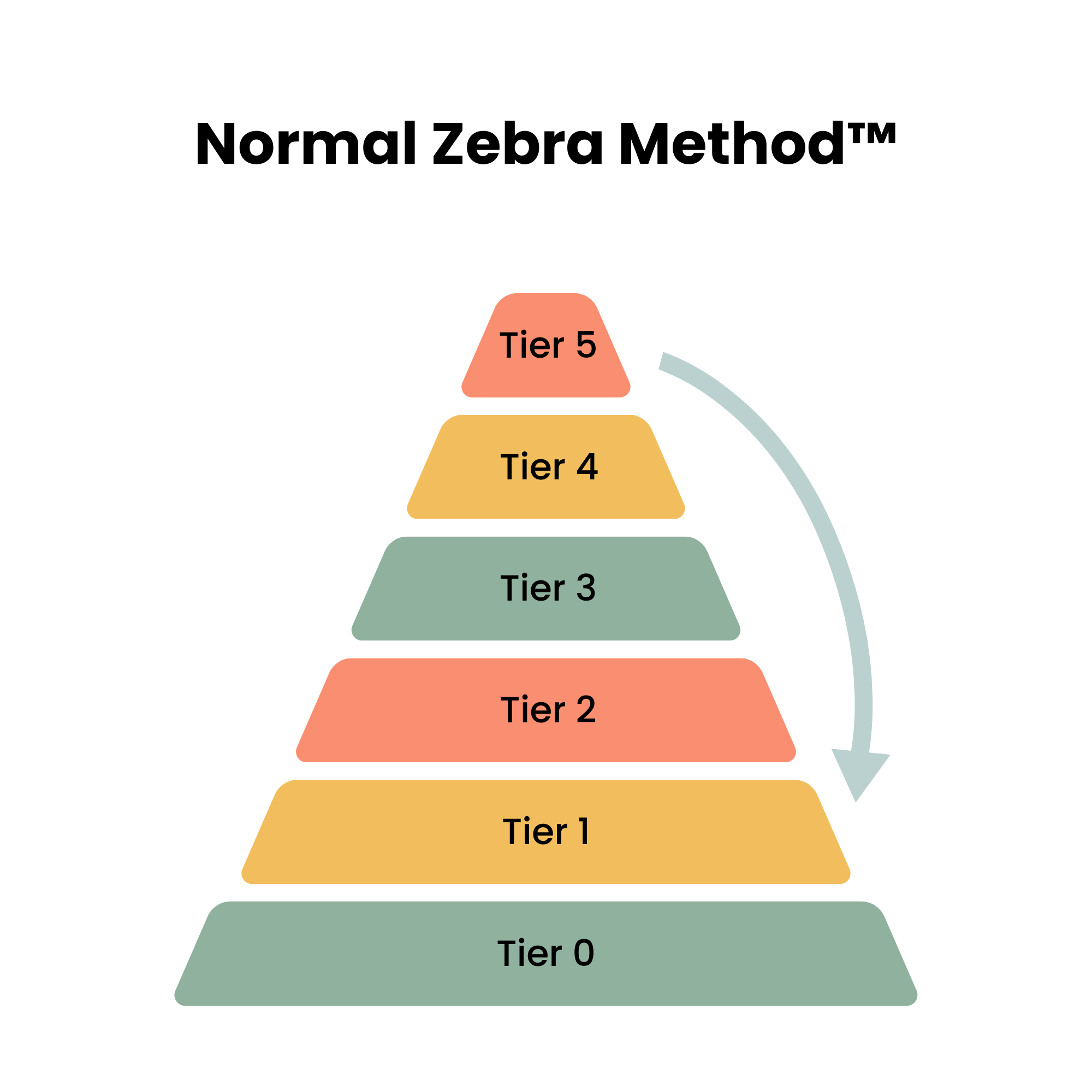
Together, these layers help explain why behaviour looks the way it does, and where support will actually make a difference.
What the method helps you see
By mapping internal experience alongside behaviour, the Normal Zebra Method helps explain patterns that often feel confusing, contradictory, or hard to respond to in the moment.
Why the same behaviour can look completely different from one day to the next, even when routines and expectations haven’t changed.
How a child or adult can manage in one environment, but struggle significantly in another.
Why effort, motivation, or consequences don’t reliably predict outcomes when internal load is already high.
How well-intentioned support sometimes escalates distress instead of reducing it, and why that isn’t a failure of care or consistency.
The method helps shift the focus from What’s wrong?
to What’s going on, and what’s needed first?
Who the method is for
The Normal Zebra Method is designed for people working with neurodivergent children — and for anyone supporting behaviour that feels complex, inconsistent, or hard to interpret using traditional approaches.
For schools and educators
Schools use the method to build shared understanding across classrooms, support teams, and leadership so responses are consistent, compassionate, and grounded in what students are experiencing internally, not just what’s visible on the surface.
For parents and caregivers
Parents use the method to make sense of behaviour at home, reduce self-blame, and respond with clarity rather than urgency, especially when strategies that “should” work don’t seem to help.
For professionals
Psychologists, therapists, and allied professionals use the method as a shared language that supports assessment, formulation, and collaboration without reducing children or families to labels or checklists.
At its core, the method supports understanding before action — wherever that understanding is needed.
How the method is used
The Normal Zebra Method is used as a shared framework for understanding behaviour. It supports clearer thinking, more accurate responses, and better collaboration across settings.
In schools
Schools use the method to build shared language across teachers, support staff, and leadership, helping teams understand behaviour consistently and respond in ways that reduce escalation rather than react to it.
With families
Parents and caregivers use the it to slow down decision-making, make sense of behaviour in context, and choose responses that reduce pressure rather than add to it.
In professional practice
Professionals use the it to support formulation, collaboration, and communication, creating a clearer picture of internal experience alongside observable behaviour.
The method doesn’t replace existing approaches — it helps ensure they’re applied at the right level, at the right time.
Explore the Normal Zebra Method
If you’d like to explore the Normal Zebra Method in more depth, you can start wherever feels most useful.
A deeper look at the framework and how the layers fit together.
Articles exploring behaviour, neurodiversity, and internal experience through the NZM lens.
Practical, low-pressure resources for parents, schools, and professionals.
There’s no single right place to start as understanding builds over time.